How to Make a Printed Cookbook From Family Recipes
A practical guide to turning scattered family recipes into a real printed book — what to include, how to order it, and the mistakes that cost reprints.
Best starting point
Use Recipes We Share for the working system, then use this guide to make better decisions.
The strongest archive combines product workflow with family judgment: the app handles structure, search, sharing, and AI assistance while your family adds context no tool can invent.
In Recipes We Share
- Capture the original recipe and create a clean version.
- Organize it so relatives can find and use it.
- Add memories, comments, and versions as the recipe evolves.
What this guide helps you decide
- What to prioritize first.
- Where manual judgment matters.
- How to avoid a system your family will abandon.
A printed family cookbook is one of the few gifts people keep for decades. It is also a project that stalls more often than it finishes, almost always for the same reasons.
Here is how to actually get one printed.
Decide what the book is for
This single decision determines everything else, and skipping it is why projects drift.
A working cookbook lives in a kitchen and gets splattered. Recipes you cook now, clear typography, lies flat, cheap enough to replace. Light on stories.
An heirloom is a record. Handwritten cards reproduced as images, photographs, who each recipe came from. Fewer recipes, more context. Read as often as it is cooked from.
A gift for an occasion — a wedding, a significant birthday, a memorial. Usually one branch of the family, often assembled quickly.
Most stalled projects are someone trying to make all three at once. Pick one. You can make another later.
What to include
Recipes: fewer than you think
Thirty to sixty is the sweet spot. Under thirty feels slight; over eighty and the project becomes work and never finishes.
Choose by: does anyone actually cook this, and is it ours? A clipped magazine recipe nobody has made does not earn a page.
The handwriting
If you have cards in a family member's hand, reproduce the image of the card, not just the typed text.
This is the single thing people react to most when they open the book. The typed version is easier to cook from — so include both. Card image on one side, clean typed version opposite. It is the layout people thank you for.
The stories
Two or three sentences per recipe. Who it came from, when it appeared, one detail. This is what separates a family cookbook from a printout.
If you can only write stories for fifteen of the forty, do fifteen. Uneven is fine; empty is not.
Photographs
Photos of people beat photos of food. A picture of your grandmother in her kitchen is worth more here than a styled shot of the casserole.
How to organize it
By meal type (starters, mains, puddings) is conventional, easy to navigate, and slightly dull.
By person — Grandma Ruth's, Aunt Karen's — is what most families end up preferring in an heirloom. It reads like the family rather than a menu.
By occasion (Christmas, birthdays, funerals) suits families whose cooking is tied to gatherings.
Whichever you pick, include an index. People will look for one dish by name.
The production steps
1. Collect. Get every recipe into one place, in a consistent form. This is 80% of the work and the stage where projects die. Doing it digitally first means you are not retyping anything twice.
2. Cut. Take the long list down to your thirty to sixty. Be ruthless — a tight book is better than a padded one.
3. Fill the gaps. You will find you have no puddings, or nothing quick. Fill from dishes the family actually eats rather than padding with anything.
4. Write the stories. Batch this. Sit down once and do all of them; it goes faster than one at a time.
5. Check every recipe. Someone must read each one and ask: could a person who has never made this follow it? Missing oven temperatures and "add the rest of the ingredients" are the classic errors. A printed mistake is permanent.
6. Lay it out. One recipe per page, or one per spread with the card image. Do not cram — white space is what makes it feel like a book.
7. Order one proof copy. Always. Always.
The proof copy is not optional
Order exactly one, and read it cover to cover before ordering the rest.
You will find something. Type too small to read in a kitchen. A photo that looked fine on screen and printed muddy. A recipe running onto a page you have to hold flat. A name spelled wrong — which, in a family cookbook, is the one people remember.
A proof costs about the same as one gift copy. A reprint costs the whole run.
How many copies
More than you think, but not wildly more.
Count the households who will genuinely want one, add a few. People underestimate: cousins ask, and grandchildren ask later, sometimes years later.
Print-on-demand means you can reorder — but only if you keep the source files. Which is the real argument for assembling it digitally: the book can be reprinted in fifteen years, when it matters most.
Mistakes that cost reprints
- No proof copy. The most expensive mistake and the easiest to avoid.
- Untested recipes. If nobody has cooked it from the written version, it is not ready.
- Typing without keeping the originals. Scan the cards before you transcribe. The images are the artifact.
- Waiting for one person. Someone always promises three recipes and does not send them. Set a date and print without them; they can go in the second edition.
- Making it too long. Ambition is what kills these projects.
Start digital, print second
Nearly every successful family cookbook is assembled digitally first — several relatives can contribute, nothing is retyped twice, and the collection still exists when someone wants another run in a decade.
That is also the honest reason to do it that way: the printed book is a snapshot, and the digital collection is the thing that keeps growing after it.
If you are short a few dishes, the everyday staples are already written — Sunday Pot Roast, Classic Beef Lasagna, Southern Peach Cobbler, Flaky Buttermilk Biscuits — so the gaps do not hold up the project.
Before any of it: digitize the handwritten cards. That is the raw material, and it is the part with a deadline.
Start free, get the recipes in one place, invite the family to add theirs, and print when the collection is ready rather than when the deadline arrives.
Ingredient weights mentioned in this guide
Put the process into practice
Use Recipes We Share to save the recipe and the story around it
The platform is designed for the full workflow these articles describe: capture the original recipe, refine it into a clean version, save the notes and memory behind it, and share it with family in one place.
- Preserve the original image and the cleaned recipe together
- Attach memories, notes, and context while the details are still available
- Share the finished recipe with family instead of passing it around manually
On this page
Related posts
More articles in guides to keep the momentum going.
Get Your Holiday Ingredient Math Right Before the Holiday
Recipe cards say "a turkey," "a can of pumpkin," "a stick of butter" — not grams. Work out the real weights for your Thanksgiving and Christmas baking menu now, while there's still time to shop and scale with confidence.
Meal Planning From Your Own Family Cookbook (Not a Stranger's Blog)
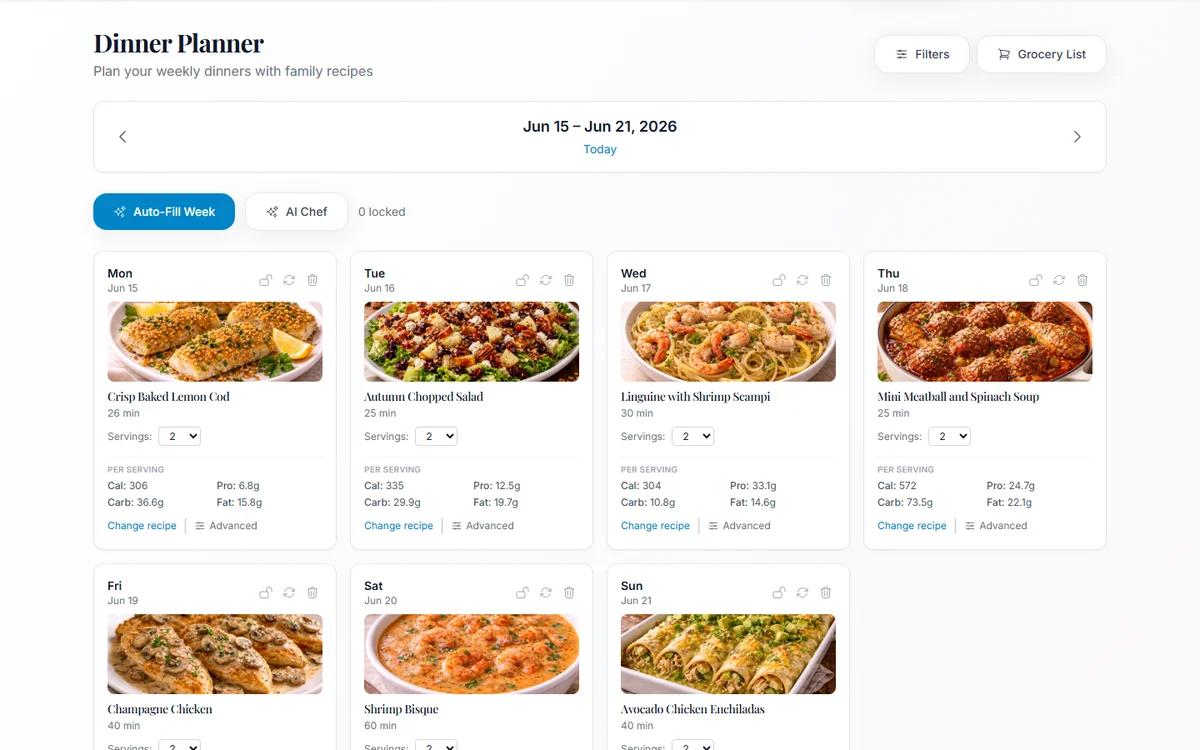
Most meal planners suggest recipes nobody in your house has agreed to eat. Planning from dishes your family already likes removes the hardest step.

The Recipe Box Audit: What to Digitize First (With a Weekend Plan)
You will not scan four hundred cards. Here is how to sort a recipe box by what is actually at risk, and digitize the irreplaceable ones in a weekend.