
The Recipe Box Audit: What to Digitize First (With a Weekend Plan)
You will not scan four hundred cards. Here is how to sort a recipe box by what is actually at risk, and digitize the irreplaceable ones in a weekend.
Best starting point
Use the app to turn the photo into a usable recipe, then use this guide to protect the details.
Recipes We Share keeps the original card, AI-extracted ingredients, cleaned-up directions, notes, and family context together so the work does not split across camera rolls, notes apps, and spreadsheets.
In Recipes We Share
- Upload the card or cookbook page from your phone.
- Review the extracted ingredients, steps, timing, and yield.
- Save the original image beside the polished recipe card.
What this guide helps you decide
- How to photograph the card cleanly.
- Which details still need a human check.
- How to avoid losing handwriting, edits, and story.
The reason recipe boxes do not get digitized is that people start at the front and try to do all of it.
Card one is a fruit salad from a magazine. Card two is a casserole clipped from a soup label. By card fifteen the enthusiasm is gone, and the box goes back in the cupboard for another three years — with the cards that actually mattered still in it, still unscanned.
The fix is triage. Sort by risk, not by category.
The audit: four piles, thirty minutes
Empty the box onto a table and deal each card into one of four piles. Do not read them properly, do not get sentimental yet, do not stop to reminisce. Thirty minutes.
Pile 1 — Irreplaceable
Handwritten by someone in your family. This is the only pile that genuinely matters.
If your grandmother wrote it, it exists in exactly one place, on paper, in a cupboard, and it is one flood, fire, or house move away from not existing at all. Nobody else on earth has a copy.
Pile 2 — Annotated
Printed or clipped, but someone has written on it. "Use 2 tsp not 1." "Bake 10 min longer at altitude." "Kids hate this."
The recipe is replaceable. The annotation is not. Someone in your family cooked this enough times to correct it, and that correction is real knowledge.
Pile 3 — Clipped, clean
Magazine cuttings, soup-label recipes, printouts, no handwriting. Almost all of these are findable online in thirty seconds.
Pile 4 — Unidentifiable
No title, no context, half a recipe, handwriting nobody recognises. Set aside — you need a person, not a scanner.
What to do with each
Pile 1: scan every card today. Not this month. Today. Photograph the card itself before anything else, because the image is the artifact. Then get the text in.
Pile 2: scan, and make sure the annotation survives. If you type the recipe and drop the margin note, you have preserved the replaceable half and thrown away the valuable half.
Pile 3: skip almost all of it. Keep three or four you genuinely cook. The rest are on the internet.
Pile 4: photograph and ask. Send the picture to the family group chat. Someone will recognise the handwriting. Do this while there are still people who can — this pile is the one with a real clock on it.
The weekend plan
Saturday morning — the audit
Four piles, thirty minutes. Then photograph every card in piles 1 and 2, front and back. Do not transcribe yet, do not organize, just capture. An hour, maybe two.
If you do nothing else, this is the part that counts. After this the recipes exist in more than one place, and everything after is improvement rather than rescue.
Saturday afternoon — text
Turn the images into searchable recipes. Scanning handwriting with your phone works well on clear cards and struggles with faded pencil and cursive, so plan to correct as you go — the machine gets you 80% of the way and you supply the judgement. Check quantities especially: a misread 1/2 as 12 is the kind of error that survives for years.
Keep the original photo attached. Always.
Sunday morning — the stories
This is the step that makes it a family cookbook rather than a database.
For each recipe in pile 1, write two or three sentences. Who made it. When it appeared. What was different about theirs. Anything anyone said about it.
You will not remember this in ten years, and neither will anyone else. Fifteen minutes of writing now preserves something no scanner can capture.
Sunday afternoon — share it
Invite the family and tell them what you have done. Two things happen: other people start adding their own, and the collection stops depending on you alone. That second one is the actual backup.
Realistic expectations
A weekend does not do four hundred cards. It does the twenty to forty that matter, which is the correct outcome — a box where the irreplaceable recipes are safe is a solved problem, whatever is left in pile 3.
Two mistakes worth avoiding
Transcribing without photographing. The handwriting is the artifact. Text alone loses it permanently.
Waiting for the right system. People spend months choosing software while the cards sit in a cupboard. Photograph them tonight with the phone in your pocket. Organize later; capture now.
While you work
You do not need an empty book. Everyday dishes — Classic Diner Meatloaf, Golden Baked Mac and Cheese, Sunday Pot Roast — are already there, so the cookbook is useful from the first evening while the family cards go in over time.
More detail on the scanning itself: how to digitize handwritten recipes.
Start free, and do the audit this Saturday. It is thirty minutes, and it is the difference between having those recipes and having had them.
Ingredient weights mentioned in this guide
Make the scanning step easier
Use Recipes We Share to go from photo to usable recipe card
Instead of managing phone photos, manual notes, and cleanup steps in separate places, upload the recipe once and keep the original image, extracted text, and polished digital version together.
- Upload one recipe photo or a full batch from your phone
- Keep the handwritten original attached to the clean recipe
- Edit the extracted ingredients and steps in one place
On this page
Related posts
More articles in guides to keep the momentum going.
Get Your Holiday Ingredient Math Right Before the Holiday
Recipe cards say "a turkey," "a can of pumpkin," "a stick of butter" — not grams. Work out the real weights for your Thanksgiving and Christmas baking menu now, while there's still time to shop and scale with confidence.
How to Make a Printed Cookbook From Family Recipes
A practical guide to turning scattered family recipes into a real printed book — what to include, how to order it, and the mistakes that cost reprints.
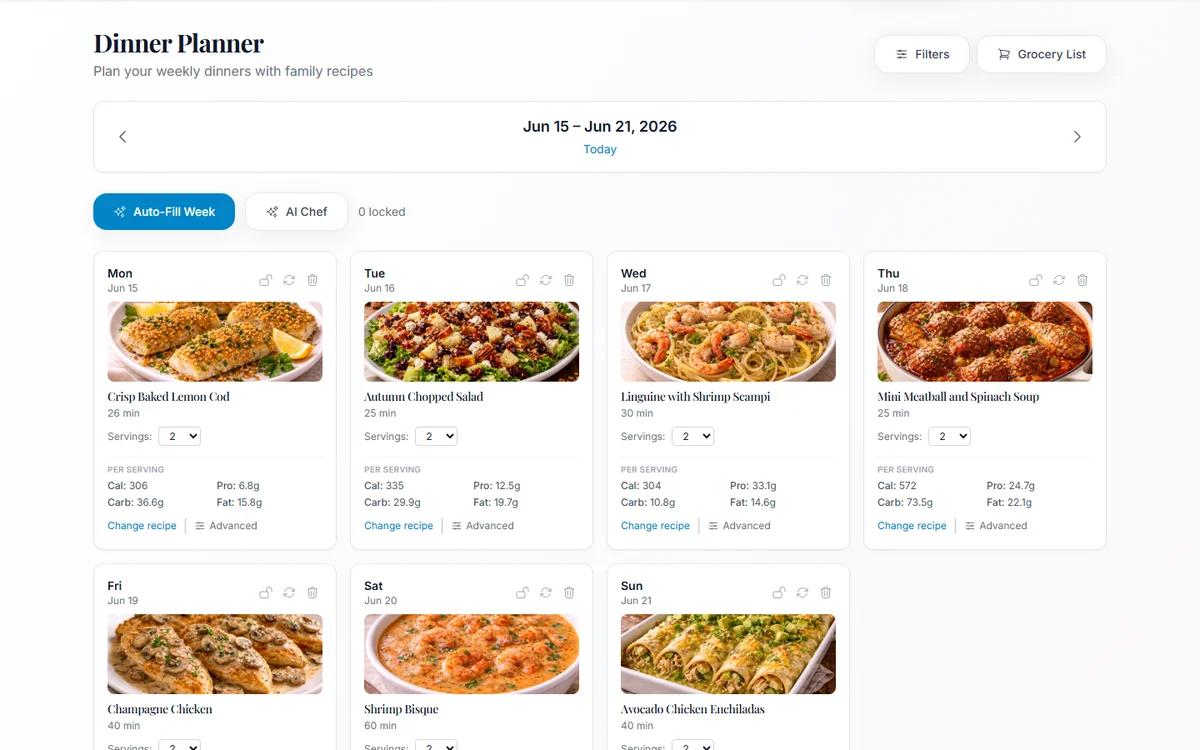
Meal Planning From Your Own Family Cookbook (Not a Stranger's Blog)
Most meal planners suggest recipes nobody in your house has agreed to eat. Planning from dishes your family already likes removes the hardest step.