How to Build a Shared Family Cookbook Across Multiple Households
A practical guide to building one shared family cookbook without duplicate recipes, confusing edits, or recipes trapped in one person's account.
Best starting point
Create one shared cookbook first, then decide how each household should contribute.
The app gives every family member a place to add recipes, preserve source photos, comment with local variations, and find the same trusted version later.
In Recipes We Share
- Create the household cookbook and invite contributors.
- Add texted recipes, screenshots, and family versions as structured entries.
- Use comments and memories for local variations instead of duplicate chaos.
What this guide helps you decide
- How to avoid competing recipe versions.
- How to handle ownership and edits.
- How to make the archive usable across households.
The strongest family cookbook is rarely owned by one household. Recipes move across parents, siblings, adult children, cousins, in-laws, and friends who became family. If the cookbook only works inside one kitchen, part of the family history is always at risk.
Recipes We Share is designed for that shared reality. Each person can have access, contribute recipes, preserve originals, and add comments without forcing everyone into one login or one person's folder system.
The hard part is not inviting people. The hard part is keeping the cookbook clear once everyone starts contributing.
Start with one source of truth
Every important recipe should have one primary record. That record can include the original image, clean recipe, notes, comments, and variations, but the family should know where the main version lives.
Without one source of truth, families end up with:
- three copies of the same pie
- unclear holiday versions
- screenshots with no source
- edits made in one place but not another
- relatives asking which recipe is current
Use comments or notes for small household differences. Create a separate recipe only when the variation is meaningfully different.
Give people roles without making the system heavy
A shared cookbook needs enough structure to prevent confusion, but not so much that relatives avoid contributing.
Simple rules help:
- one person owns the initial archive setup
- trusted family members can add recipes
- recipe authors or household admins can clean up duplicates
- relatives can comment with variations or missing details
The goal is shared contribution with visible ownership.
Preserve local versions without duplicating everything
Shared family recipes often change across kitchens. One branch uses extra garlic. Another makes the sauce sweeter. One person doubles the recipe for reunions.
Capture those differences as:
- comments for small tips
- notes for accepted family variations
- separate recipes for major adaptations
- memories for stories and occasions
This keeps the archive collaborative without turning it into a duplicate-filled mess.
Organize by family use
Do not organize only by generic food categories. A shared family cookbook should reflect how people actually search.
Useful collections include:
- Thanksgiving
- Christmas morning
- Grandma's recipes
- Sunday dinners
- reunion favorites
- weeknight rotation
- recipes to clarify
Collections make the archive feel like a family resource instead of a database.
Make contribution easy from phones
Most relatives will not sit down at a scanner. They will find a card in a drawer, take a photo, and send it from the kitchen.
That is why the contribution workflow matters:
- Capture the recipe photo.
- Upload it into the shared cookbook.
- Review the AI-extracted recipe.
- Add the source person and collection.
- Ask relatives to fill in unclear details.
The easier the first contribution feels, the more likely the archive will keep growing.
Build for search, not nostalgia alone
Memory matters, but the cookbook also has to work on a normal Tuesday night. People should be able to search by person, dish, holiday, collection, or practical need.
If a cousin can find the chili, see the original card, read the family notes, and plan it for dinner, the cookbook is doing its job.
Shared access is what makes preservation durable
A cookbook on one laptop is still fragile. A shared archive survives moves, device changes, busy seasons, and the reality that recipe knowledge is spread across the family.
The best time to build it is while the people who know the recipes can still help explain them.
Ingredient weights mentioned in this guide
Make the shared cookbook real
Bring scattered recipes into one household cookbook your family can actually use
Recipes We Share is built for the moment when recipes are spread across texts, screenshots, and different kitchens. Save them once, organize them into collections, and share access without losing control of the archive.
- Give each household member their own login
- Keep shared recipes, comments, and memories together
- Organize by holiday, person, or collection instead of message thread
On this page
Related posts
More articles in guides to keep the momentum going.
Get Your Holiday Ingredient Math Right Before the Holiday
Recipe cards say "a turkey," "a can of pumpkin," "a stick of butter" — not grams. Work out the real weights for your Thanksgiving and Christmas baking menu now, while there's still time to shop and scale with confidence.
How to Make a Printed Cookbook From Family Recipes
A practical guide to turning scattered family recipes into a real printed book — what to include, how to order it, and the mistakes that cost reprints.
Meal Planning From Your Own Family Cookbook (Not a Stranger's Blog)
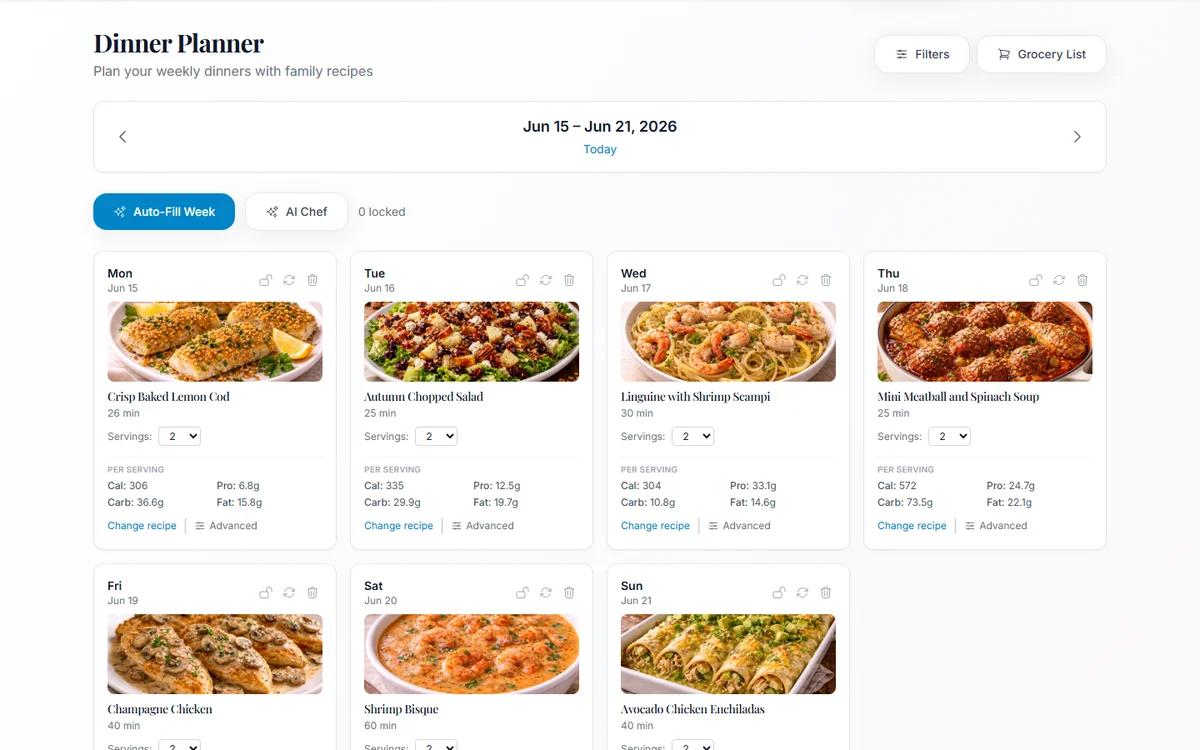
Most meal planners suggest recipes nobody in your house has agreed to eat. Planning from dishes your family already likes removes the hardest step.