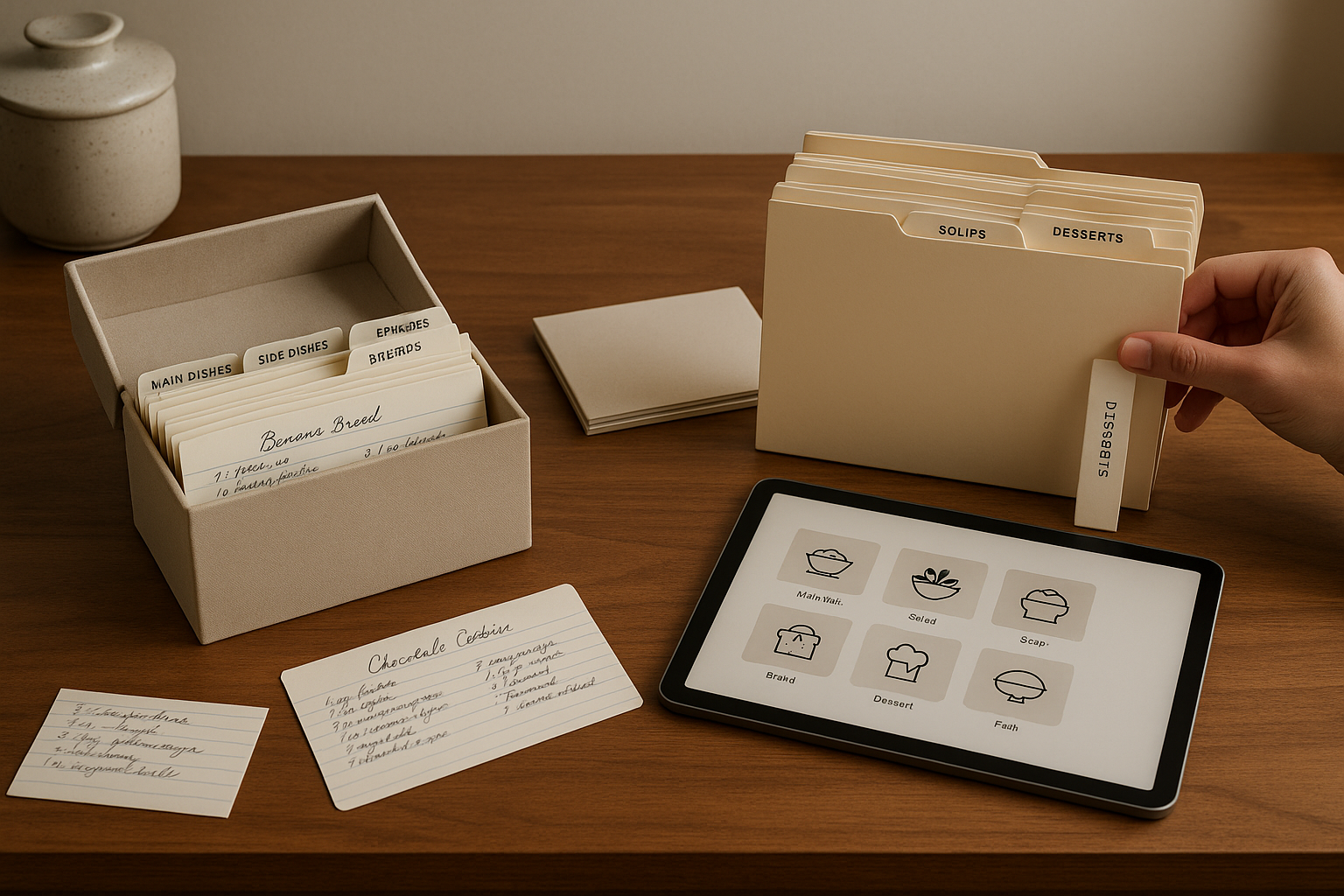
Naming and Tagging Recipes So Your Family Can Actually Find Them
Good recipe archives fail when naming is inconsistent. Here is a simple system for titles, tags, and collections that keeps family recipes searchable.
One of the fastest ways to ruin a family recipe archive is inconsistent naming. It happens quietly. A pie recipe is saved as "Mom's Pie," then again as "Pecan Pie," then again as "Thanksgiving Pie from Lisa." Technically all three are understandable, but together they make search weaker and duplicates harder to manage.
A good cookbook does not need complex taxonomy. It needs consistent titles, predictable tags, and collections that reflect how the family actually cooks.
Start with readable titles, not sentimental ones alone
Sentimental naming is tempting, especially for family recipes. But titles should help people identify the dish first and the family connection second. "Pecan Pie (Grandma June)" is easier to understand than "Grandma June's Favorite." The second title only works if the person searching already knows the recipe.
Strong titles usually include:
- the dish name
- a qualifier if needed
- the person or occasion in parentheses
That gives you something human and searchable at the same time.
Use tags for retrieval, not for decoration
Tags are only useful if they answer the question, "How would a family member think to look for this?" Good tags are practical:
- Christmas
- freezer-friendly
- potluck
- Grandpa
- weeknight
- make-ahead
Bad tags are vague, overly clever, or duplicated by the title. If every dessert recipe is tagged with "dessert" and nothing more specific, the tag system is not doing much work.
Limit yourself to a small set of repeatable patterns
Families often over-tag at the beginning, which creates a mess later. A better system is to use a few reliable tag types:
- person tags
- occasion tags
- meal-type tags
- cooking-use tags
That keeps the archive flexible without turning it into a pile of one-off labels nobody remembers to reuse.
Collections and tags should do different jobs
Collections are for broad browsing. Tags are for sharper retrieval. A collection might be "Holiday Favorites," while tags inside it could include "Christmas Eve," "make ahead," and "Aunt Carol." When both layers are used well, the archive becomes much easier to navigate.
If everything is a collection, browsing gets heavy. If everything is a tag, the archive becomes abstract. Use both, but give them separate purposes.
Make search easier for the next person, not just for yourself
The real test of naming and tagging is whether someone else can use it. Could a cousin, child, or in-law find the right casserole without asking which version is the correct one? Could they search by holiday, person, or dish and land on the right result?
That is the standard worth designing for. A family cookbook only works when it makes recipes easier to locate than digging through texts, binders, and memory.
Turn organization into a system
Use Recipes We Share to organize recipes without building your own filing system
The easiest archive to maintain is the one your family will still use six months from now. Recipes We Share gives you collections, tags, search, memories, and recipe images without forcing you into a spreadsheet-and-folder workflow.
- Group recipes into collections like holidays, brunch, or family favorites
- Use tags and search so people can actually find what they need
- Keep notes, photos, and the final recipe in the same record
Preserve your family's recipes before they're lost
Sign up for weekly tips on digitizing and sharing your family recipe collection.
On this page
Related posts
More articles in tips to keep the momentum going.
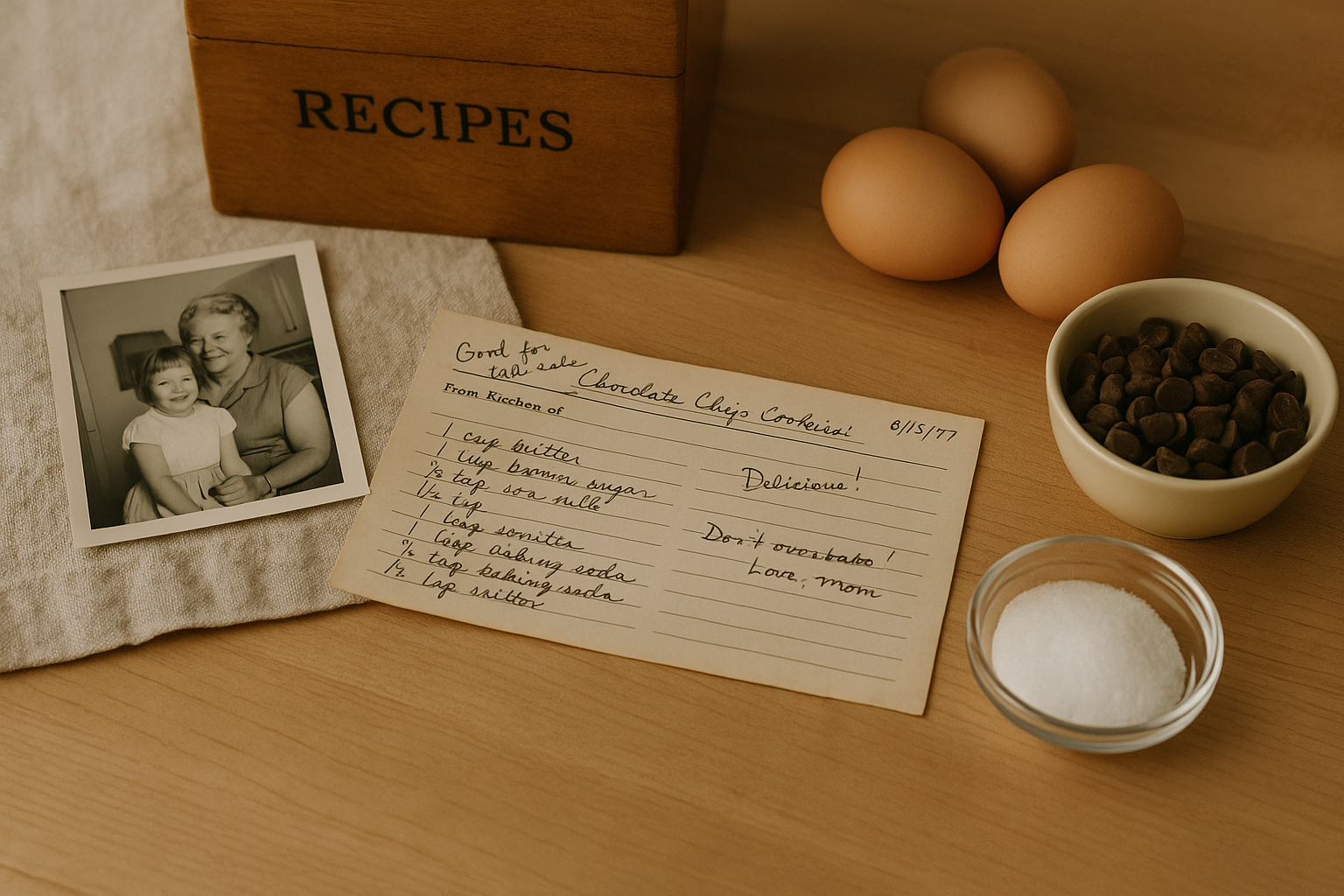
What to Save With a Family Recipe Besides the Ingredients
The ingredients matter, but they are not the whole recipe. These are the extra details that make a family recipe understandable and worth preserving.
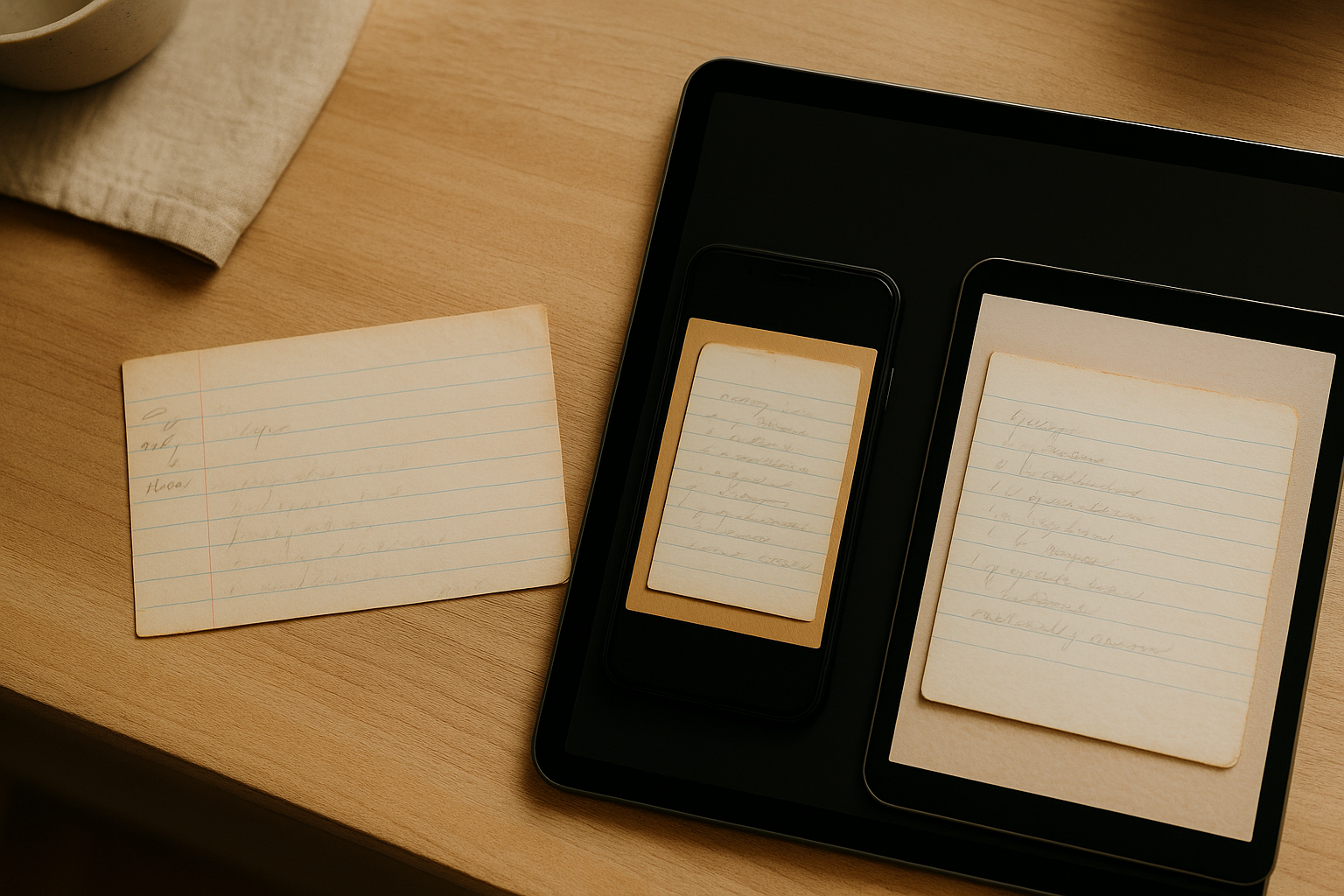
Recipe Card Cleanup Mistakes to Avoid Before You Digitize
Cleaning up a recipe card should improve readability without stripping away the handwritten details that make the original meaningful.