How to Use Family Recipes for Meal Planning, Nutrition, and Grocery Lists
Preserve recipes once, then use them for weekly dinner planning, nutrition context, serving adjustments, and grocery lists.
Best starting point
Use the meal planner to bring preserved recipes back into the weekly dinner routine.
Recipes We Share connects saved recipes to weekly planning, nutrition context, serving adjustments, and grocery lists so the family cookbook becomes useful on ordinary nights too.
In Recipes We Share
- Choose recipes from the family cookbook for each dinner slot.
- Use nutrition and time details to balance the week.
- Turn planned meals into a grocery list when it is time to shop.
What this guide helps you decide
- How to build a realistic week from family favorites.
- How to use nutrition as context without overcomplicating dinner.
- How to keep preserved recipes in active rotation.
Preserving family recipes is the first win. Using them again is the bigger win.
A cookbook that only stores recipes can become another archive people admire but rarely open. Recipes We Share connects preservation to daily life: saved recipes can become weekly dinners, nutrition context, serving adjustments, and grocery lists.
That matters because families do not only need to remember what Grandma made. They also need to decide what to cook this week.
Start with recipes your family already trusts
Most meal-planning tools start with generic recipe suggestions. That can be useful, but it misses the emotional and practical advantage of family recipes.
Your saved cookbook already contains:
- recipes people know and like
- dishes tied to real family routines
- notes about substitutions and timing
- serving sizes your household can adjust
- meals that fit your actual kitchen
Planning from that base feels less like starting over.
Use the planner to build a realistic week
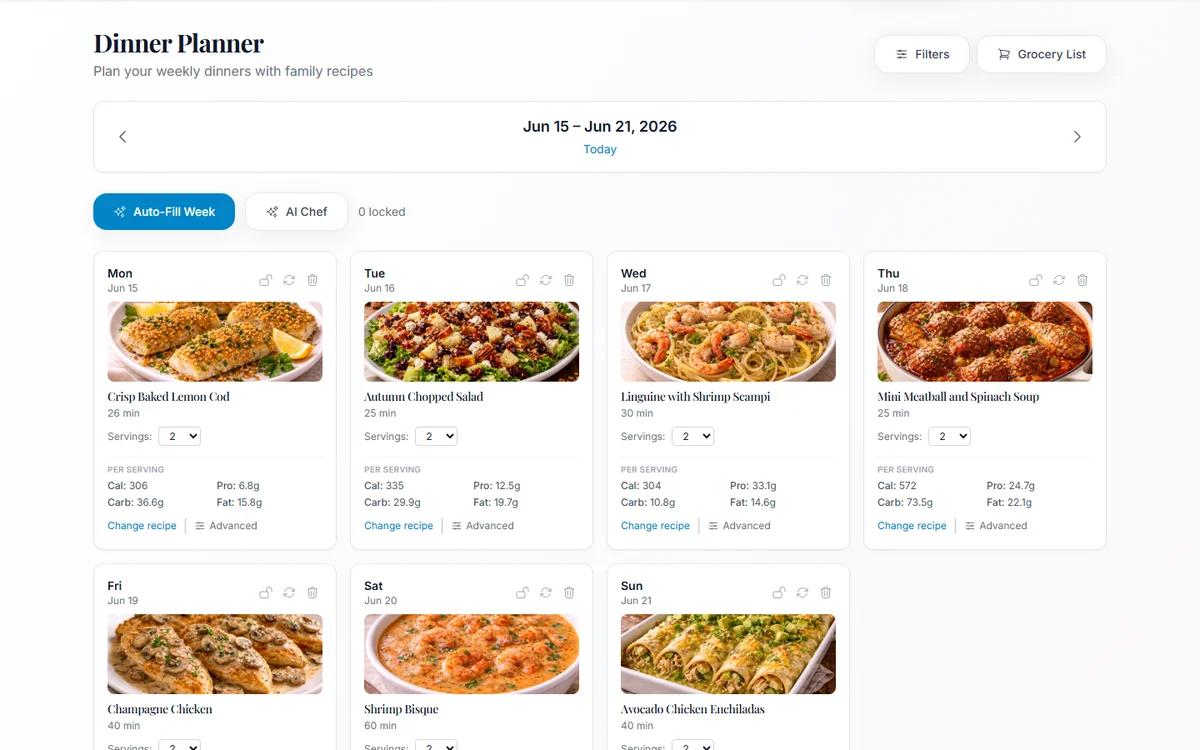
In Recipes We Share, the meal planner helps you assign recipes to dinner slots across the week. Each meal card can show the recipe image, cook time, servings, and nutrition context when available.
A practical planning rhythm:
- Pick two reliable family favorites.
- Add one lighter meal or soup.
- Add one make-ahead recipe.
- Leave one flexible slot for leftovers or a quick swap.
- Use the grocery list to turn the plan into shopping action.
The goal is not a perfect meal plan. The goal is fewer last-minute decisions.
Use nutrition as context, not judgment
Nutrition details are most useful when they help families plan with awareness. Calories, protein, carbohydrates, and fat can help you balance a week without turning a family cookbook into a diet app.
Useful questions:
- Do we have enough lighter dinners this week?
- Which meals are higher protein?
- Which dinners need a vegetable or side?
- Which meals are better for busy nights?
- Which recipes should be adjusted for servings?
Nutrition should support planning, not replace common sense or family preference.
Let servings drive the grocery list
Serving adjustments matter because family meals are rarely static. Some weeks two people are home. Other weeks guests come over. Holiday recipes may need to scale up.
When servings are part of the plan, the grocery list becomes more useful. You are not just saving a recipe; you are turning it into this week's shopping needs.
Keep preserved recipes in rotation
The easiest way to keep family recipes alive is to cook them. Add one preserved recipe to the meal plan each week:
- a grandparent's soup
- a parent's weeknight casserole
- an aunt's enchiladas
- a holiday side adapted for a normal dinner
- a dessert for Sunday
The archive becomes stronger when recipes keep gathering new photos, comments, and memories.
A family cookbook should help with dinner
Preservation and planning belong together. The original card protects the past. The clean recipe helps someone cook today. Meal planning, nutrition, and grocery lists help the recipe stay part of family life.
That is the difference between storing recipes and keeping them alive.
Plan from recipes you already trust
Use Recipes We Share to turn preserved recipes into this week's dinners
Pick family recipes for the week, adjust servings, review nutrition context, and use grocery lists when it is time to shop.
- Plan dinners from your own family cookbook
- Use calories, protein, carbs, and fat as planning context
- Create grocery lists from planned meals
On this page
Related posts
More articles in guides to keep the momentum going.
Get Your Holiday Ingredient Math Right Before the Holiday
Recipe cards say "a turkey," "a can of pumpkin," "a stick of butter" — not grams. Work out the real weights for your Thanksgiving and Christmas baking menu now, while there's still time to shop and scale with confidence.
How to Make a Printed Cookbook From Family Recipes
A practical guide to turning scattered family recipes into a real printed book — what to include, how to order it, and the mistakes that cost reprints.
Meal Planning From Your Own Family Cookbook (Not a Stranger's Blog)
Most meal planners suggest recipes nobody in your house has agreed to eat. Planning from dishes your family already likes removes the hardest step.